
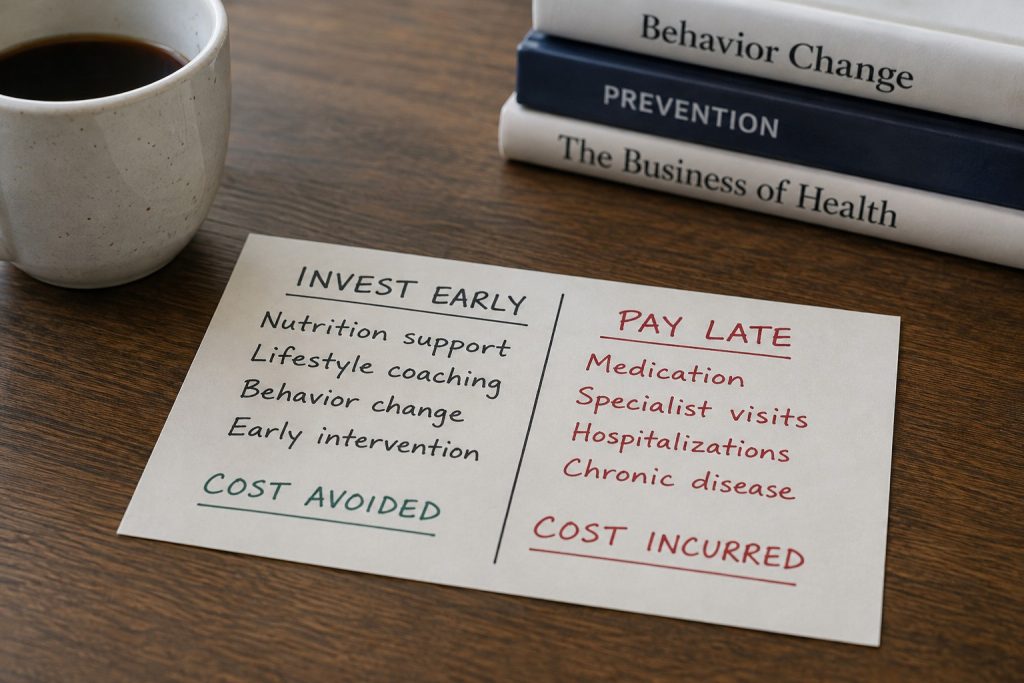
Healthcare costs continue to rise, driven by specialty medications, hospitalizations and chronic conditions such as diabetes and cardiovascular disease.
But what if one of our biggest healthcare cost problems is actually a timing problem?
We are very good at paying for care after someone becomes sick. We are far less comfortable investing in the support that could change a person’s trajectory before a high-cost diagnosis or claim occurs.
For HR and benefits leaders, this creates an opportunity to rethink how we define and measure value. Instead of focusing only on traditional cost savings, we should be measuring cost avoidance.
Cost savings asks: How much did we reduce an existing expense?
Cost avoidance asks: What expensive outcome did we help prevent?
There is no claim for the hospitalization that never happened. No pharmacy expense for the medication an employee never needed. No immediate line item showing the value of preventing prediabetes from progressing to diabetes.
But those non-events matter.
Poor metabolic health develops before disease
Metabolic health reflects how effectively the body regulates blood sugar, blood pressure, cholesterol, energy and fat storage.
Poor metabolic health may include:
Elevated blood glucose or insulin resistance
Prediabetes
High blood pressure
Elevated triglycerides or unhealthy cholesterol levels
Excess weight, particularly around the abdomen
Fatty liver disease
A combination of risk factors known as metabolic syndrome
These conditions do not develop overnight. Risk often builds for years before it becomes a costly diagnosis.
Employers can frequently see the trajectory. Blood glucose is rising. Blood pressure is moving in the wrong direction. Weight and cholesterol risks are compounding. An employee may be beginning a medication that could become part of long-term chronic disease management.
Yet our healthcare system often waits.
Risk becomes diagnosis. Diagnosis becomes treatment. Treatment becomes ongoing management. Then we ask why costs are so high.
Measure whether we changed the trajectory
A more forward-looking benefits strategy asks different questions:
Which employees are moving toward poor metabolic health?
What costs are likely if nothing changes?
Where can we intervene before risk progresses?
Are employees improving or stabilizing key health indicators?
Are fewer people progressing to diabetes and other chronic conditions?
Are we avoiding new medications, emergency care and preventable hospitalizations?
These measures may not deliver an immediate, neatly packaged ROI calculation. They can, however, provide meaningful evidence that an organization is reducing future risk and avoiding predictable downstream costs.
In healthcare, we are very good at measuring the cost of doing something. We are far less sophisticated at measuring the cost of doing nothing.
Food is Medicine is an upstream strategy
Nutrition is one of our most accessible opportunities to intervene earlier.
Food does not replace medicine, and lifestyle cannot prevent every disease. But there is a meaningful window between “healthy” and “high-cost chronic disease” when personalized nutrition and lifestyle support can improve metabolic health and change a person’s trajectory.
This rising-risk population is often where people remain motivated, interventions are relatively affordable and the potential to avoid future costs is significant.
Benefits leaders have an opportunity to redefine the value of prevention. The question should not only be, “What did this program save us this year?”
It should also be: “What will it cost us if we wait?”
We already understand many of the downstream costs associated with poor metabolic health. Continuing to identify risk without acting on it is not a sustainable strategy.
The most valuable healthcare claim is not always the one we manage more efficiently.
It is the one that never happens.